
 Products
 Orders
 Registration
 Support


After the heat of summer fades, Korea welcomes a short but beautiful
autumn. Yellow ginkgo leaves cover the streets and royal palaces of
Seoul, while mountains and forests gradually turn shades of red and
orange. With relatively low humidity and pleasant weather for
outdoor activities, autumn is an ideal season to enjoy both city
sightseeing and nature trips.
This guide is designed for international travelers planning an
autumn trip to Korea. It covers regional foliage seasons, six
recommended destinations, transportation tips, and practical advice
on what to wear during Korea’s cool and changeable fall weather.
Blog
Best eSIM Picks
Korea Fall Guide: 6 Best Foliage Spots, Travel Tips

Korea Fall Guide:
6 Best Foliage Spots, Travel Tips
Autumn foliage in Korea generally begins in the mountainous areas of Gangwon Province in late September and gradually moves south. In regions such as Seoraksan, fall colors can often be enjoyed from early October, while Seoul and southern regions usually reach their peak between late October and mid-November. As foliage timing varies depending on temperature and rainfall, it is best to check the latest forecast before your trip.
- Seoraksan and Gangwon mountain areas: Late September to late October
- Seoul and Gyeonggi Province: Mid-October to early November
- Southern inland areas: Late October to mid-November
- Naejangsan and Jeolla Province: Late October to mid-November
- In September, focus on higher elevations in Gangwon Province. In October, plan trips to Seoraksan and the Seoul metropolitan area. In November, explore central Seoul and southern regions.
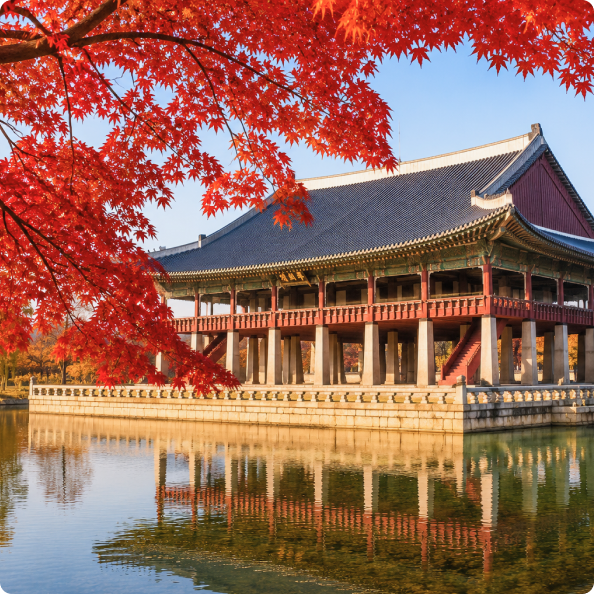
Located in central Seoul, Gyeongbokgung Palace, Changdeokgung Palace,
Deoksugung Palace, and Namsan are some of the city’s best autumn
foliage destinations. Here, travelers can experience traditional
Korean palace scenery alongside panoramic views of modern Seoul.
At Gyeongbokgung Palace, take a walk around Geunjeongjeon Hall and
Gyeonghoeru Pavilion. Continue to nearby Seochon or Insadong to
explore hanok alleys, traditional craft shops, and cafés. Later, walk
along the Namsan walking trails or take the Namsan Cable Car to the N
Seoul Tower observatory for sweeping autumn views of the city.
- These attractions are easily accessible by subway and are suitable for a half-day sightseeing itinerary.
- Gyeongbokgung Palace → Seochon or Insadong → Namsan walking trails
- Late October to early November
- Gyeongbokgung Palace: 서울 종로구 사직로 161 경복궁
- Changdeokgung Palace: 서울 종로구 율곡로 99 창덕궁
- Deoksugung Palace: 서울 중구 세종대로 99 덕수궁
- Namsan Walking Trail: 서울 용산구 남산공원길 126
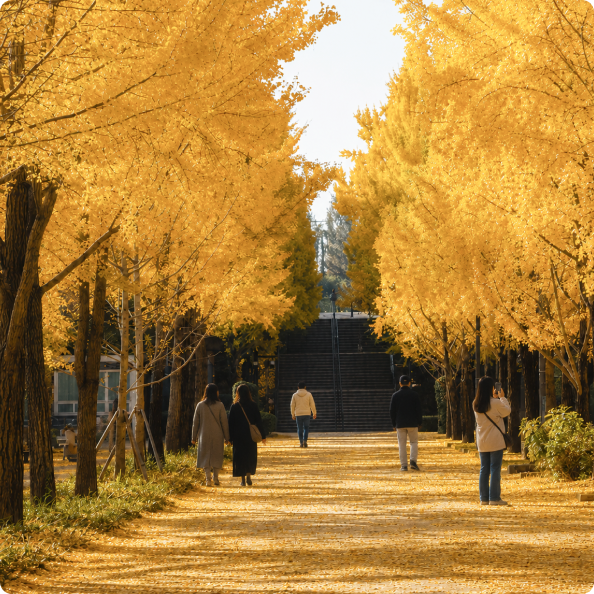
Seoul Forest is a large urban park located in Seongsu-dong,
Seongdong-gu, Seoul. Its spacious lawns, golden ginkgo paths, and
colorful maple groves make it an ideal place for a relaxing autumn
walk.
Visitors can enjoy natural scenery in the heart of Seoul before
exploring the nearby cafés, select shops, and pop-up stores of
Seongsu-dong. Renting a bicycle to explore the park and the nearby
Hangang River area or enjoying a picnic on the lawn are also highly
recommended.
- Seoul Forest is within walking distance of Seoul Forest Station on the Suin-Bundang Line and Ttukseom Station on Subway Line 2. The Seongsu-dong area can become crowded on weekends, so a morning visit is recommended.
- Seoul Forest ginkgo path → Lawn walk or picnic or Bicycle ride → Seongsu-dong cafés and select shops
- Late October to early November
- 서울 성동구 뚝섬로 273
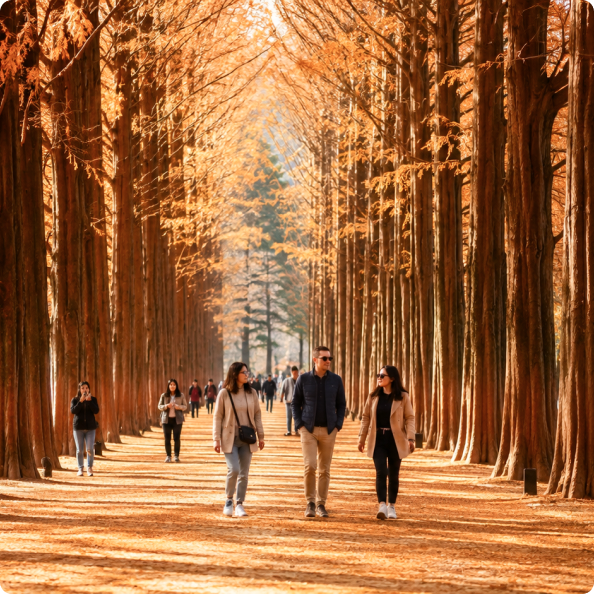
Nami Island is located in Chuncheon, Gangwon State, and is famous for
its long ginkgo and metasequoia tree-lined paths. A ferry ride from
Gapyeong Wharf takes approximately five minutes.
With mostly flat walking paths, Nami Island is an accessible
destination for travelers who want to enjoy Korea’s autumn scenery
without hiking. For a more memorable arrival, visitors can also enter
the island by zip wire.
- From Seoul, take the ITX-Cheongchun train or the Gyeongchun Line to Gapyeong Station, then continue to the wharf by taxi or bus. Check the ITX train schedule, Nami Island admission tickets, and operating information in advance.
- Nami Island Wharf → Ginkgo Tree Lane → Metasequoia Lane → Bicycle ride or riverside walk → Gardens and exhibition spaces
- Mid-October to early November
- 강원 춘천시 남산면 남이섬길 1
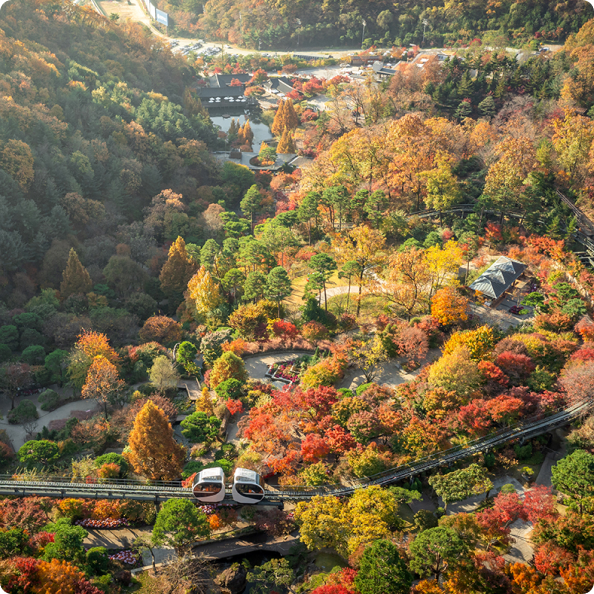
Hwadam Forest is an ecological garden located in Gwangju, Gyeonggi
Province. Its gently sloping forest paths and themed gardens make it
one of the most popular autumn foliage destinations near Seoul.
The forest is especially known for its dense maple tree areas and
scenic viewpoints overlooking the colorful landscape. Travelers who
prefer less walking can use the monorail to explore selected sections.
The birch forest, pine garden, and rock garden each offer a different
seasonal atmosphere.
- Take the Gyeonggang Line to Gonjiam Station, then continue by bus or taxi. During the peak autumn season, check the advance reservation system and available admission times before visiting.
- Maple Garden → Birch Forest → Pine Garden → Observatory → Monorail experience
- Mid-October to early November
- 경기 광주시 도척면 도척윗로 278-1
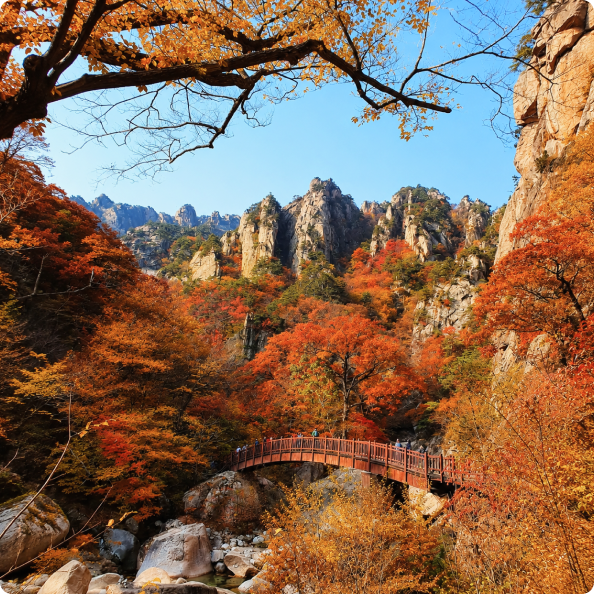
Seoraksan National Park stretches across Sokcho, Inje-gun, and
Yangyang-gun in Gangwon State. It is one of Korea’s best-known
mountain destinations and one of the earliest places to experience
autumn foliage.
Its rugged granite peaks, deep valleys, and vivid red and golden
forests create a dramatic landscape that is difficult to find in the
city. Mountain temperatures can be considerably lower, so bring a warm
outer layer.
- Take an intercity or express bus from Seoul Express Bus Terminal or Dong Seoul Bus Terminal to Sokcho. From central Sokcho, transfer to a local bus bound for Seoraksan.
- Seorak-dong Visitor Center → Sinheungsa Temple → Seorak Cable Car → Gwongeumseong Fortress Observatory or Biseondae Valley Trail
- Early to late October
- 강원 속초시 설악산로 833
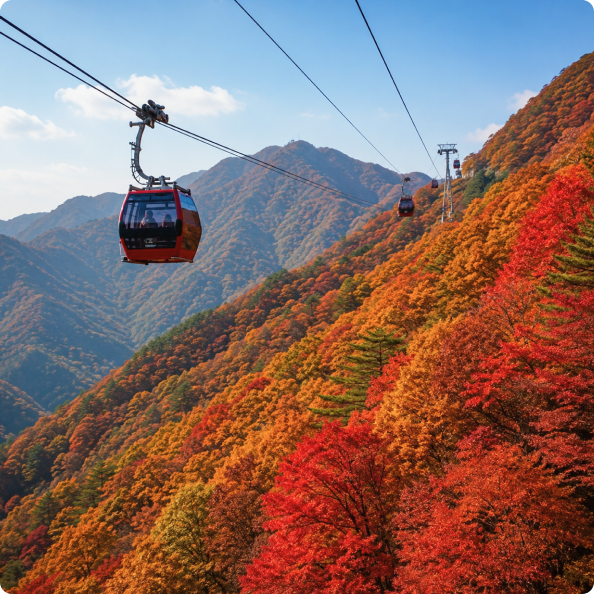
Naejangsan National Park is located in Jeongeup, Jeonbuk State. In
late autumn, a brilliant red maple tunnel stretches from the park
entrance toward Naejangsa Temple, creating one of Korea’s most iconic
autumn scenes.
The vivid foliage, traditional temple architecture, ponds, and
pavilions make Naejangsan especially popular with photographers and
travelers seeking classic Korean autumn scenery.
- Take a KTX or regular train from Yongsan Station to Jeongeup Station, then continue to Naejangsan by local bus or taxi. Traffic can be heavy during peak foliage season, so weekday mornings are recommended.
- Naejangsan Maple Tunnel → Uhwajeong Pavilion → Naejangsa Temple → Cable Car → Observatory
- Late October to mid-November
- 전북 정읍시 내장산로 1207
Korea experiences significant temperature differences between day and night during autumn, and September can feel very different from November. Instead of relying on one heavy piece of clothing, wear several light layers that are easy to add or remove.
- Short-sleeve or thin long-sleeve tops, light shirts, and cardigans
- Long-sleeve tops, knitwear, light jackets, or windbreakers
- Coats, lightweight padded jackets, scarves, and thermal innerwear
- Windproof jackets, non-slip walking shoes, and extra socks
Although daytime temperatures in Seoul may feel warm, evenings can quickly become chilly. Higher-elevation destinations such as Seoraksan and Naejangsan often feel colder than city areas, so pack an additional warm outer layer.

Real-time information is especially important when traveling during
Korea’s autumn foliage season. Reliable mobile data helps travelers
check changing mountain weather, cable car operations, bus stop
locations, and KTX or ITX train schedules and bookings.
LG U+ eSIM provides access to a Korean mobile carrier’s 5G and LTE
network, making it a practical option for international travelers
visiting multiple regions.
- LG U+ is one of Korea’s major mobile carriers and operates a nationwide 5G and LTE network.
- There is no need to replace a physical SIM card. After purchasing online, travelers can install the eSIM by scanning the provided QR code.
- A range of data plans is available for short trips and longer stays, allowing travelers to choose a plan that suits their itinerary.
- Purchase and install the eSIM before traveling, then quickly access map and transportation apps after arriving in Korea.
The autumn colors that begin at Seoraksan gradually spread to Seoul’s
royal palaces and Seoul Forest, before reaching Nami Island and
Naejangsan. Prepare for Korea’s large temperature changes with a warm
outer layer and comfortable walking shoes.
LG U+ 5G and LTE eSIM also helps you stay connected while checking
maps, transportation schedules, and travel updates. With fewer worries
about connectivity, you can focus more fully on the colorful scenery
outside the train window and the memorable moments waiting at each
destination.
And have you decided what kind of internet to use for your trip? The answer is simple: go with LG U+’s prepaid 5G SIM.
“Conclusion: 5G is simply more convenient during your trip.”
- Feel the speed difference instantly
- Exceptional stability in busy locations
- Enhances the overall experience, from travel documentation and work to navigation
even more with LG U+ 5G eSIM